
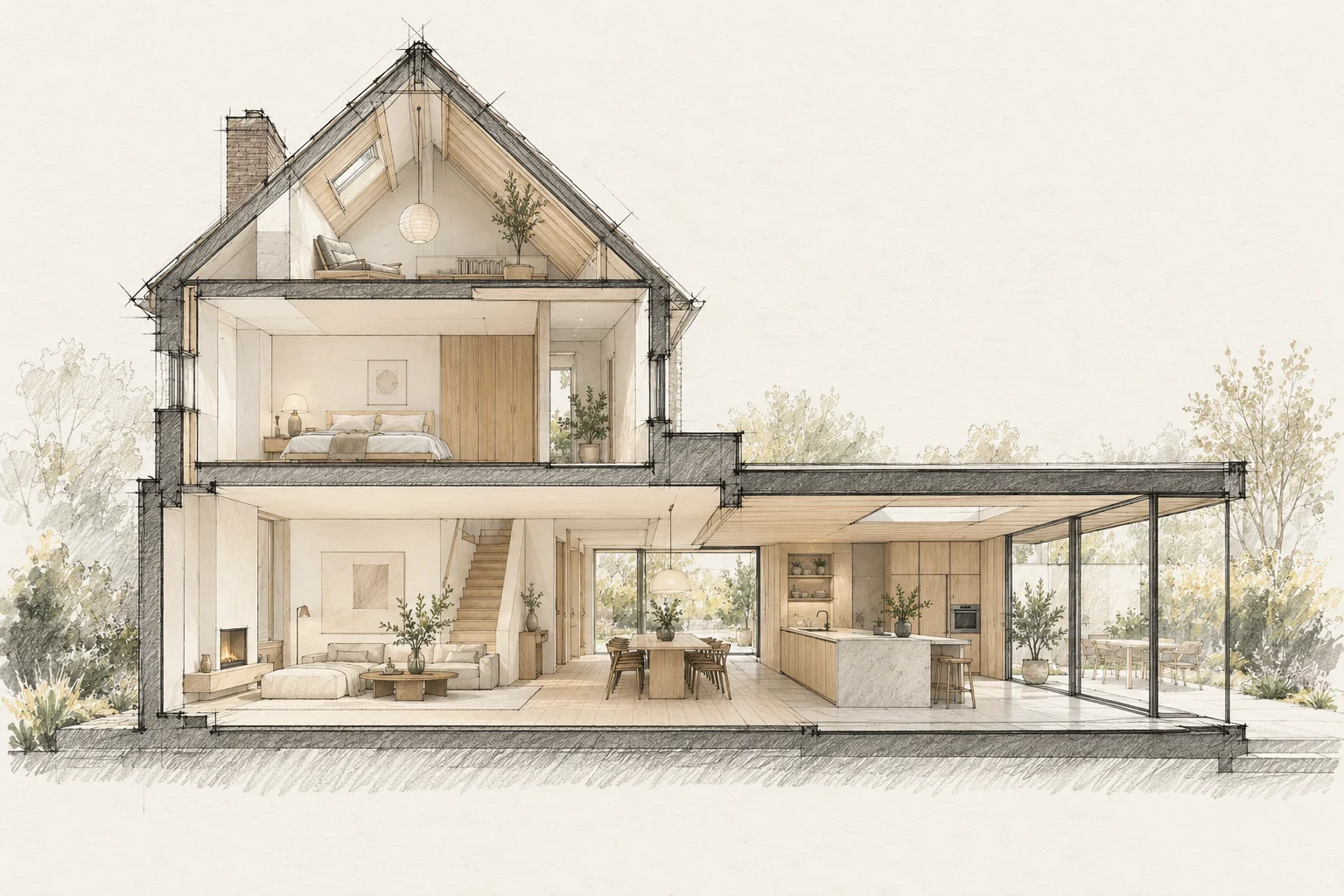
Large glazing does not automatically create a pleasantly light home. An extension also affects daylight in the existing rooms behind it.
Which trade-off matters?
Completely concealing a junction may look attractive but make later inspection harder. Compare a closed finish with a solution keeping vulnerable points accessible.
Draw the whole floor
Identify current openings and those that disappear. An extension can make the original living room deeper, so review the complete plan.
What the drawing needs to explain
Create a defect map with photographs, locations and investigation questions. Include inspection access and the intended drainage path in the repair proposal.
A situation to test your plan against
Timber and masonry can show damage where the materials meet. Record moisture traces or deformation first. A new finish does not help when the underlying cause remains unclear.
Questions for your own property
- What happens to the existing room?
- Where does privacy matter?
- How is overheating considered?
Is concealing damage enough for a lasting repair?
Investigate the cause first. Then agree repairs, inspection and maintenance access; without that coordination, a neat finish can conceal a recurring problem.
Illustrative design situations, not evidence of completed work. Assess decisions against the actual property.